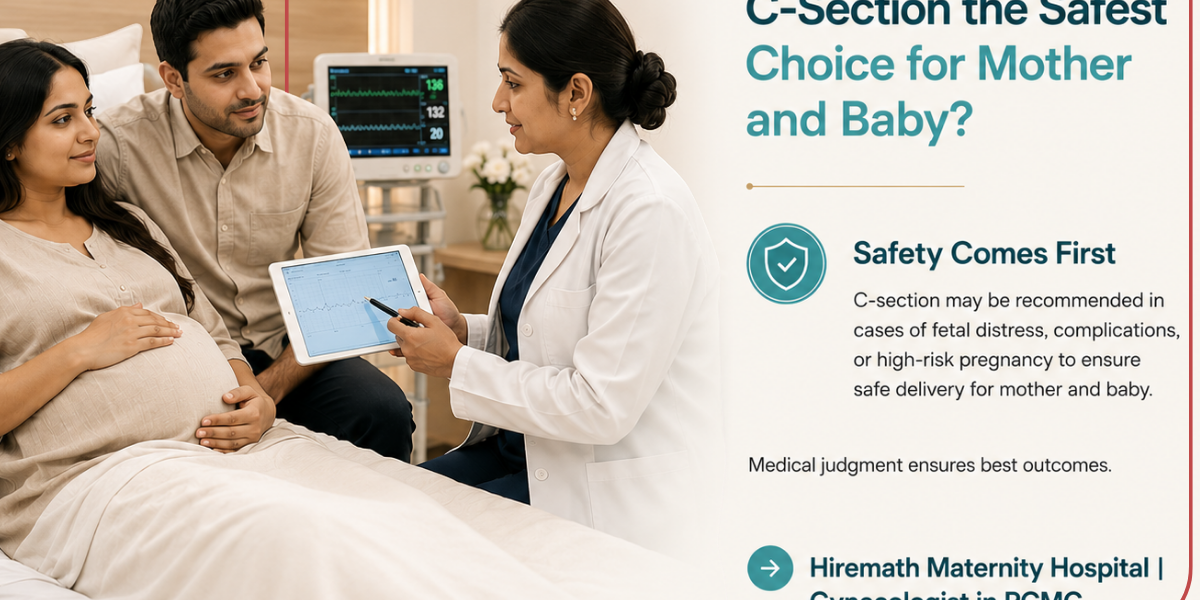
Pregnancy and childbirth are unique experiences, and every delivery journey is different. While many women hope for a vaginal birth, there are situations where a cesarean delivery, commonly known as a C-section, becomes the safest option for both mother and baby. Understanding when a C-section may be recommended can help expectant parents make informed decisions and feel more confident about their birth plan.
For many women, normal delivery in Pimple Saudagar is a preferred option and remains the safest choice when pregnancy progresses without complications. However, there are circumstances where a surgical delivery can significantly reduce risks and improve outcomes for both mother and child.
As an experienced gynecologist and obstetrician, Dr. Bharti Hiremath believes that the primary goal of any delivery is a healthy mother and a healthy baby. Sometimes, that goal is best achieved through a cesarean section.
What Is a C-Section?
A C-section is a surgical procedure in which a baby is delivered through incisions made in the mother’s abdomen and uterus. According to the World Health Organization (WHO), cesarean sections can be life-saving when medically indicated for either the mother or the baby.
Source: https://www.who.int/news-room/fact-sheets/detail/caesarean-section-rates
While cesarean deliveries have become increasingly common worldwide, medical experts emphasize that they should be performed when clinically necessary rather than by routine preference alone.
Why Doctors Recommend a C-Section
A cesarean delivery may be planned before labor begins or performed as an emergency procedure during labor if unexpected complications arise.
The decision is based on various maternal and fetal factors, always prioritizing safety.
Medical Situations Where a C-Section Is Often the Safest Choice
1. Fetal Distress
One of the most common reasons for an emergency C-section is fetal distress.
This occurs when the baby shows signs of not receiving enough oxygen during labor. Abnormal fetal heart rate patterns may indicate that the baby is struggling and needs immediate delivery.
Prompt surgical intervention can help prevent serious complications and improve neonatal outcomes.
2. Placenta Previa
Placenta previa occurs when the placenta partially or completely covers the cervix.
In such cases, vaginal delivery can lead to severe bleeding that may endanger both mother and baby. A planned cesarean delivery is usually recommended for women diagnosed with this condition.
According to the American College of Obstetricians and Gynecologists (ACOG), cesarean birth is the standard recommendation for complete placenta previa.
Source: https://www.acog.org/womens-health/faqs/placenta-previa
3. Breech or Abnormal Baby Position
Most babies naturally move into a head-down position before labor. However, some babies remain in a breech position, where the feet or buttocks are positioned to come out first.
Certain abnormal fetal positions increase the risk of complications during vaginal birth. In many cases, a Caesarean section specialist may recommend a C-section to ensure a safer delivery.
4. Multiple Pregnancy Complications
Women carrying twins, triplets, or higher-order multiples may require cesarean delivery depending on:
- The position of the babies
- Gestational age
- Placental conditions
- Maternal health status
While some twin pregnancies can be delivered vaginally, many require surgical delivery for safety reasons.
Maternal Health Conditions That May Require a C-Section
Certain maternal medical conditions increase the risks associated with vaginal delivery.
Common examples include:
- Severe preeclampsia or pregnancy-induced hypertension
- Uncontrolled diabetes with a large baby
- Active genital herpes infection during labor
- Certain heart conditions
- Previous uterine surgeries
- Obstructed labor
In these situations, a Caesarean section specialist carefully evaluates risks and recommends the safest delivery method.
When Labor Does Not Progress Normally
Labor is a natural process, but sometimes it does not progress as expected.
A C-section may become necessary if:
- The cervix stops dilating despite strong contractions
- Labor continues for an unusually long time
- The baby’s head cannot move through the birth canal
- Contractions are ineffective despite medical support
This condition is often referred to as labor arrest or failure to progress.
According to the National Institutes of Health (NIH), prolonged labor can increase risks of maternal infection, fetal distress, and delivery complications.
Source: https://www.ncbi.nlm.nih.gov/books/NBK536939/
Previous C-Section: Is Another One Always Necessary?
Many women wonder whether a previous C-section means all future deliveries must also be cesarean.
The answer is not always.
Some women may be candidates for Vaginal Birth After Cesarean (VBAC), depending on:
- The type of uterine incision used previously
- Number of previous cesarean deliveries
- Overall pregnancy health
- Hospital resources and emergency support availability
Your obstetrician will evaluate your individual situation before making recommendations.
Benefits of a Medically Necessary C-Section
When appropriately indicated, cesarean delivery can provide important benefits.
These include:
- Reduced risk of birth injuries in certain situations
- Faster delivery during emergencies
- Prevention of severe maternal bleeding
- Protection of babies experiencing distress
- Safer outcomes in complicated pregnancies
Modern surgical techniques and advances in obstetric care have made C-sections safer than ever before.
Understanding the Risks
Although a C-section can be life-saving, it remains a major surgical procedure.
Potential risks include:
- Infection
- Blood loss
- Longer recovery time
- Blood clots
- Future pregnancy complications
This is why healthcare providers carefully balance the benefits and risks before recommending surgery.
The WHO emphasizes that cesarean sections improve outcomes when medically necessary but should not be performed without a clear clinical reason.
Source: https://www.who.int/news-room/fact-sheets/detail/caesarean-section-rates
How Doctors Decide What Is Best
The decision to perform a cesarean delivery is rarely based on a single factor.
Doctors consider:
- Maternal health
- Baby’s health
- Labor progression
- Pregnancy complications
- Ultrasound findings
- Fetal monitoring results
Every pregnancy is unique, and recommendations are personalized to ensure the safest possible outcome.
Open communication between patients and healthcare providers is essential. Understanding the reasons behind a recommendation often helps mothers feel more comfortable and prepared.
Preparing for a Planned C-Section
If a planned cesarean delivery is recommended, your doctor will explain:
- The timing of surgery
- Preoperative instructions
- Hospital stay expectations
- Pain management options
- Recovery guidelines
- Breastfeeding support after delivery
Being informed can help reduce anxiety and make the experience smoother.
Read More –
Expert Pregnancy and Delivery Care at Hiremath Hospital
Choosing the safest delivery method is one of the most important decisions during pregnancy. Whether you are planning a vaginal birth or require surgical delivery, expert medical guidance is essential.
At Hiremath Hospital, Dr. Bharti Hiremath provides comprehensive pregnancy care with a strong focus on maternal and newborn safety. From routine prenatal checkups to managing high-risk pregnancies and cesarean deliveries, every patient receives personalized attention and evidence-based care.
If you are looking for a trusted Caesarean section specialist in Pimple Saudagar, Hiremath Hospital offers experienced obstetric care, advanced facilities, and compassionate support throughout your pregnancy and delivery journey.
#PregnancyCare #CesareanDelivery #CSection #MaternalHealth #BabyHealth #WomenHealth #PregnancyJourney #CaesareanSectionSpecialist #PimpleSaudagar