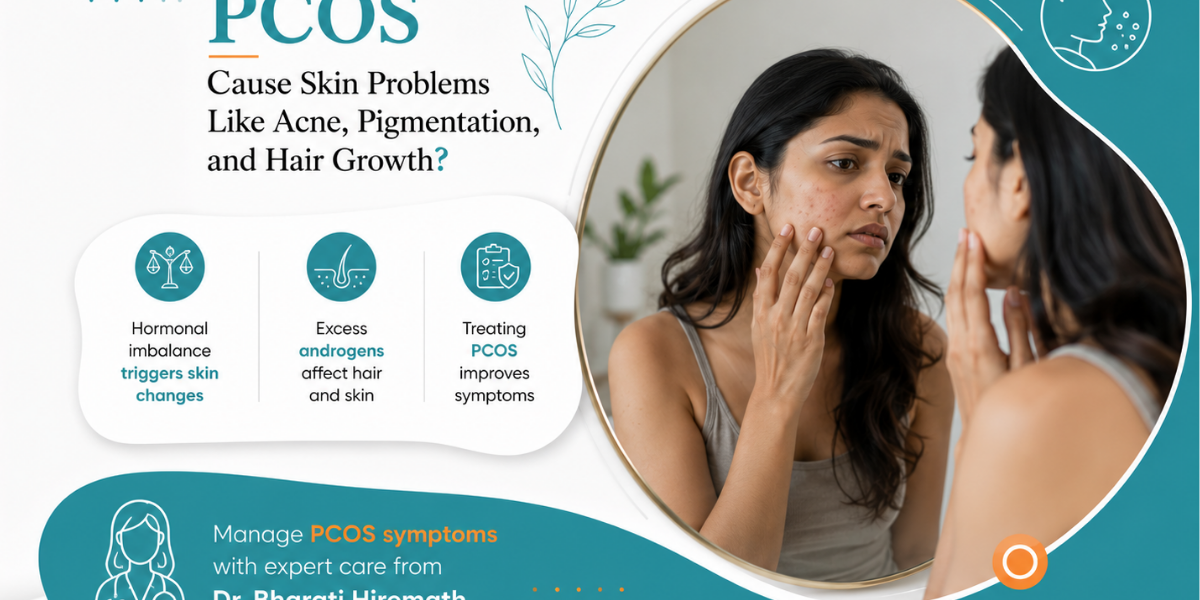
If you’ve been dealing with stubborn chin acne, dark patches on your neck, or unwanted facial hair that just won’t quit, you might be surprised to learn the real culprit isn’t your skincare routine at all. It could be your hormones. Polycystic Ovary Syndrome, or PCOS, is one of the most common hormonal conditions affecting women of reproductive age, and it shows up on your skin far more often than most people realize.
Research suggests PCOS affects roughly 1 in 6 women when assessed using the Rotterdam criteria, making it the most common hormonal disorder among women of childbearing age. And while most people associate PCOS with irregular periods or fertility struggles, the skin symptoms are often the first, and most frustrating, clue that something deeper is going on.
Let’s break down exactly why PCOS wreaks havoc on your skin and what you can actually do about it.
The Hormonal Root Cause: Androgens Gone Rogue
At the heart of nearly every PCOS-related skin issue is a group of hormones called androgens, commonly known as “male hormones,” though every woman produces them in small amounts naturally. In PCOS, the ovaries and sometimes the adrenal glands produce androgens in excess. This condition, called hyperandrogenism, is one of the core diagnostic markers of PCOS.
According to the Endocrine Society’s clinical practice guidelines, the majority of women with hirsutism, excessive hair growth, have PCOS as the underlying cause, with androgen excess responsible for the vast majority of these cases. That excess androgen doesn’t just sit quietly in your bloodstream. It actively interacts with your skin, hair follicles, and oil glands, triggering a cascade of visible changes.
Insulin resistance, which is extremely common in women with PCOS, adds fuel to the fire. When the body becomes less responsive to insulin, it produces more of it, and higher insulin levels push the ovaries to produce even more androgens. This is why so many PCOS treatment plans focus not just on hormones directly, but on managing insulin sensitivity too.
How This Shows Up on Your Skin
Once you understand the hormonal mechanism, the skin symptoms start to make a lot more sense. Here’s how excess androgens and insulin resistance translate into visible changes.
- Acne that won’t go away: Androgens stimulate the sebaceous glands to produce more oil, or sebum. This excess oil clogs pores and creates the perfect environment for acne-causing bacteria. Unlike typical teenage breakouts, PCOS-related acne tends to appear along the jawline, chin, and lower cheeks, and it often persists well into your 20s, 30s, and beyond.
- Hirsutism, or unwanted hair growth: Elevated androgens can cause fine, soft body hair to transform into coarse, dark terminal hair in areas typically associated with male pattern growth, such as the upper lip, chin, chest, and lower abdomen. Studies estimate that hirsutism affects around 65 to 75 percent of women with PCOS, compared to just 4 to 11 percent of women in the general population.
- Acanthosis nigricans, or dark, velvety patches: This pigmentation change usually appears on the neck, armpits, groin, or under the breasts. It’s strongly linked to insulin resistance rather than androgens directly, and it’s often one of the earliest visible signs of metabolic imbalance in PCOS.
- Hair thinning on the scalp: While excess hair grows in unwanted places, many women with PCOS simultaneously experience thinning at the crown or a widening part line, a pattern known as female pattern hair loss.
Why This Matters Beyond Appearance
It’s easy to dismiss these symptoms as purely cosmetic, but that mindset can actually delay proper care. Skin and hair changes are often the body’s earliest warning signs of a hormonal imbalance that, left unaddressed, can contribute to irregular ovulation, fertility challenges, and long-term metabolic risks like type 2 diabetes and cardiovascular issues.
The American College of Obstetricians and Gynecologists has emphasized that reports of hirsutism and acne should be taken seriously, not dismissed as trivial, given their impact on self-esteem, quality of life, and their possible association with underlying medical conditions. In other words, that persistent jawline acne deserves a proper medical conversation, not just another round of over-the-counter spot treatments.
What Actually Helps
The good news is that PCOS-related skin issues are manageable once the underlying hormonal imbalance is addressed. Effective PCOS treatment usually combines a few approaches working together rather than relying on skincare products alone.
- Hormonal regulation: Combined oral contraceptives are often prescribed to lower androgen levels and regulate the menstrual cycle, which in turn calms acne and slows excess hair growth over time.
- Anti-androgen medications: These work by blocking androgen receptors in the skin and hair follicles, directly reducing hirsutism and acne severity.
- Insulin-sensitizing treatment: Since insulin resistance plays such a central role, medications and lifestyle changes that improve insulin sensitivity can meaningfully reduce both acne and pigmentation issues like acanthosis nigricans.
- Lifestyle and diet adjustments: A balanced, lower glycemic-load diet, regular physical activity, and stress management can help lower insulin and androgen levels naturally, complementing medical treatment.
- Dermatological support: Topical retinoids, targeted acne treatments, and laser hair reduction can help manage the visible symptoms while the underlying hormonal treatment takes effect.
Because PCOS looks different in every woman, the most effective PCOS treatment is always personalized. What works for one person’s acne may do very little for another’s hirsutism, which is why proper diagnosis and a tailored plan matter so much.
Read More –
- Know More About PCOS
- What Are the Symptoms of PCOS?
- What Is PCOS? | Hiremath Hospital | Dr. Bharati Hiremath
Getting the Right Support
If you’ve been quietly battling breakouts, dark patches, or unwanted hair growth and wondering why nothing seems to work, it might be time to look beyond your skincare shelf. These symptoms are often your body’s way of signalling a hormonal imbalance that needs proper medical attention, not just a new face wash.
At Hiremath Maternity Hospital, women dealing with these frustrating symptoms find compassionate, expert care that looks at the full picture rather than treating skin issues in isolation. Dr. Bharti Hiremath brings years of experience in women’s health and works closely with patients to identify the root cause of their symptoms, whether that’s hormonal imbalance, insulin resistance, or another underlying factor, before building a treatment plan suited to their individual needs. If you’re searching for reliable PCOS treatment in Pimple Saudagar, Hiremath Maternity Hospital offers thorough evaluation, ongoing support, and a genuinely caring approach that helps women feel heard and understood throughout their journey to clearer skin and better hormonal health.
Frequently Asked Questions
- Can PCOS acne be cured permanently, or does it keep coming back? PCOS acne tends to return if the underlying hormonal imbalance isn’t addressed, since it’s driven by excess androgens rather than just clogged pores. However, with consistent PCOS treatment, such as hormonal regulation, insulin management, and targeted skincare, most women see significant, lasting improvement. The key is treating the root cause alongside the skin symptoms rather than relying on spot treatments alone.
- Is the dark patchy skin on my neck related to PCOS, and will it fade with treatment? Yes, dark, velvety patches on the neck, underarms, or groin, known as acanthosis nigricans, are commonly linked to the insulin resistance that often accompanies PCOS. Improving insulin sensitivity through lifestyle changes and, where needed, medication can gradually lighten these patches over several months, though results vary depending on how long the pigmentation has been present.
- Does losing weight help reduce PCOS-related hair growth and acne? For many women, even a modest reduction in body weight, around 5 to 10 percent, can lower androgen levels and improve insulin sensitivity, which noticeably reduces both acne and excess hair growth over time. That said, weight management works best alongside medical treatment rather than as a standalone fix, since hormonal factors in PCOS often need direct intervention too.
#PCOSAwareness #PCOSSkincare #HormonalAcne #WomensHealth #PCOSTreatment #HirsutismCare #PimpleSaudagar #DrBhartiHiremath #HiremathMaternityHospital #PCOSJourney