
Pelvic Heaviness and Prolapse: When to Consult a Gynecologist in Pimple Saudagar
A feeling of heaviness or pressure in the vagina can be surprisingly easy to dismiss. You may notice it only after standing for several hours, lifting something heavy or finishing a busy day.
Some women describe it as feeling like “something is coming down.” Others notice a small bulge near the vaginal opening.
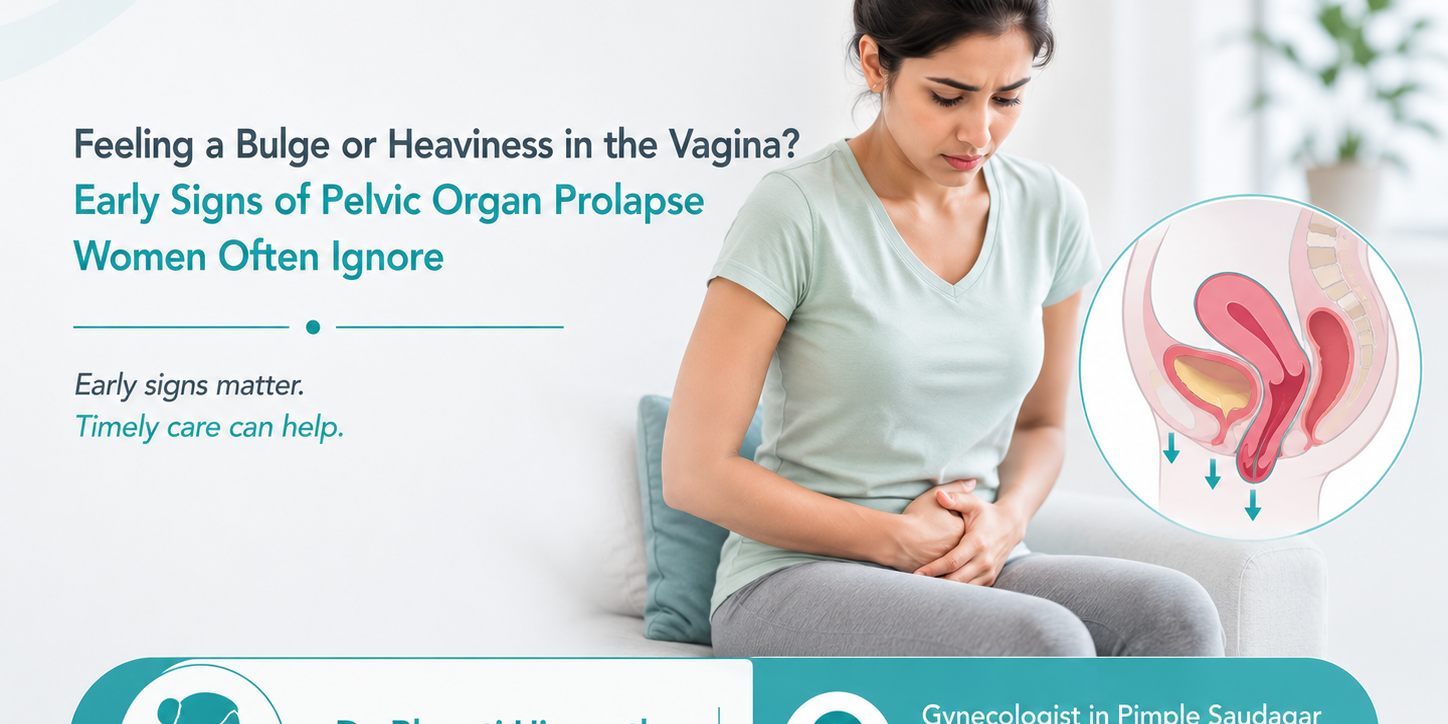
These symptoms may be associated with pelvic organ prolapse, a condition that occurs when one or more pelvic organs descend because their supporting muscles and tissues have weakened.
Prolapse can range from mild to more significant. Recognizing symptoms early and discussing them with a Gynecologist in Pimple Saudagar can help determine what is happening and whether treatment is needed.
What Is Pelvic Organ Prolapse?
The pelvic floor consists of muscles, ligaments and connective tissues that help support organs such as the bladder, uterus and rectum.
When this support weakens, one or more of these organs can descend and create pressure against or into the vaginal canal.
According to the American College of Obstetricians and Gynecologists (ACOG), pelvic support problems can involve the uterus, bladder, rectum, vaginal walls or the top of the vagina after hysterectomy.
The symptoms and treatment depend on which structures are affected and how much the prolapse is interfering with daily life.
What Does Pelvic Organ Prolapse Feel Like?
Early prolapse does not always cause dramatic symptoms.
Some women simply notice a vague feeling of pressure that becomes stronger toward the end of the day.
Common symptoms can include:
- Vaginal pressure, dragging or heaviness
- Feeling or seeing a bulge near the vaginal opening
- A sensation that something is “coming down”
- Difficulty completely emptying the bladder
- Changes in bowel movements
- Discomfort during physical activities
Symptoms may become more noticeable after prolonged standing, lifting or straining.
Why Does Pelvic Organ Prolapse Happen?
Pelvic organ prolapse usually develops because the structures supporting the pelvic organs have weakened or stretched.
Pregnancy and Vaginal Childbirth
Pregnancy places considerable pressure on the pelvic floor. Vaginal childbirth can further stretch pelvic floor muscles and connective tissues.
Risk can vary depending on factors such as the number of deliveries and individual tissue characteristics.
This does not mean every woman who has a vaginal delivery will develop prolapse.
Ageing and Menopause
Pelvic tissues naturally change with age. Hormonal changes after menopause can also affect tissue strength and elasticity.
As a result, prolapse becomes more common with increasing age, although younger women can develop it too.
Repeated Pressure on the Pelvic Floor
Conditions that repeatedly increase pressure within the abdomen may contribute to pelvic floor weakening.
These include:
- Chronic constipation and straining
- Long-term coughing
- Repeated heavy lifting
- Excess body weight
Addressing these factors can sometimes form part of conservative prolapse management.
Can Young Women Develop Pelvic Organ Prolapse?
Yes.
Although prolapse becomes more common with age, it is not exclusively a postmenopausal condition.
Women may notice symptoms after pregnancy or childbirth, particularly when the pelvic floor has undergone significant stretching.
Connective tissue characteristics, chronic constipation and repeated heavy lifting can also contribute.
Therefore, younger age should not be a reason to ignore persistent vaginal heaviness or a noticeable bulge.
Are All Vaginal Bulges Caused by Uterine Prolapse?
No.
“Prolapse” does not always mean that the uterus itself is coming down.
Different types of pelvic organ prolapse can involve different structures. The bladder can bulge toward the front vaginal wall, the rectum can push toward the back wall, or the uterus may descend.
Some women have more than one type simultaneously.
A pelvic examination by a gynecologist helps identify which structure is involved and how significant the prolapse is.
Can Prolapse Cause Urinary Problems?
Yes, depending on the type and severity.
Some women experience difficulty emptying their bladder completely, increased urinary frequency or urine leakage.
Interestingly, urinary symptoms do not always correspond directly with how large a prolapse appears. This is another reason a full clinical assessment is useful rather than judging the problem only by the visible bulge.
Bowel symptoms can also occur, particularly with certain types of posterior vaginal wall prolapse.
How Is Pelvic Organ Prolapse Diagnosed?
Diagnosis usually involves discussing your symptoms followed by a pelvic examination.
Your gynecologist may ask whether the heaviness becomes worse while standing, coughing, lifting or straining. You may also be asked about childbirth history, urinary leakage, bowel problems and previous pelvic surgery.
During examination, the doctor assesses pelvic support and determines which organs or vaginal walls are affected.
Additional tests are not necessary for every patient but may be recommended when urinary symptoms or other concerns require further evaluation.
Does Pelvic Organ Prolapse Always Need Surgery?
No.
This is an important misconception.
Treatment depends primarily on the severity of the prolapse, symptoms, age, overall health, future pregnancy plans and how much the condition affects quality of life.
According to NICE guidance, non-surgical management may be appropriate for many women with symptomatic pelvic organ prolapse.
Pelvic floor muscle training may be recommended in appropriate cases. Some women may also benefit from a vaginal pessary, a medical device designed to provide additional pelvic support.
Surgery may be considered when symptoms are significant or conservative approaches are insufficient, but it is not automatically the first treatment.
Can Pelvic Floor Exercises Reverse Prolapse?
Pelvic floor muscle training can strengthen and improve the function of pelvic floor muscles and may reduce symptoms in some women, particularly with milder prolapse.
However, exercises cannot be assumed to completely reverse every prolapse.
Correct technique is also important. A trained healthcare professional or pelvic floor physiotherapist may help ensure that the appropriate muscles are being activated.
When Should You See a Gynecologist?
A feeling of vaginal heaviness that occurs once after unusual physical activity may not necessarily indicate prolapse.
However, arrange an evaluation if the sensation repeatedly returns, becomes stronger over time or is accompanied by a visible or palpable bulge.
You should also seek medical advice if you experience difficulty passing urine, problems emptying your bladder or bowel, recurrent urinary symptoms, unexplained bleeding or significant pelvic discomfort.
Early assessment does not necessarily mean early surgery. It simply helps establish what is causing your symptoms and what options are available.
Do Not Wait Until the Bulge Becomes Severe
Women sometimes live with pelvic pressure for months or years because they feel embarrassed or assume it is an unavoidable consequence of childbirth.
Pelvic organ prolapse is a medical condition and can be discussed openly with your gynecologist.
Early symptoms may sometimes be manageable with conservative measures, lifestyle changes and pelvic floor rehabilitation. More significant prolapse also has treatment options depending on individual circumstances.
Consult Dr. Bharati Hiremath, Gynecologist in Pimple Saudagar
If you notice persistent vaginal heaviness, pelvic pressure, a vaginal bulge or changes in bladder control, consider consulting Dr. Bharati Hiremath, Gynecologist in Pimple Saudagar, at Hiremath Maternity Hospital.
A proper pelvic examination can identify whether prolapse is present, determine which structures are involved and help guide an individualized management plan based on your symptoms and needs.
Frequently Asked Questions
1. What are the first signs of pelvic organ prolapse?
Early symptoms can include vaginal heaviness, pelvic pressure, a dragging sensation or feeling that something is coming down. Some women also develop urinary or bowel changes. Symptoms may become more noticeable after prolonged standing or physical activity.
2. Can pelvic organ prolapse get worse over time?
Prolapse symptoms can change over time, but progression varies considerably between women. Factors such as ageing, repeated straining and pelvic floor health may influence symptoms. Regular evaluation can help determine whether treatment or monitoring is appropriate.
3. Can pelvic organ prolapse be treated without surgery?
Yes. Depending on the type and severity, management may include pelvic floor muscle training, lifestyle changes or a vaginal pessary. Surgery may be considered for selected women when symptoms are significant or conservative treatment is insufficient.
#pelvicorganprolapse #pelvicfloorhealth #gynecologistinpimplesaudagar #gynecologist #womenshealth #uterineprolapse #pelvicheaviness #womenswellness #pimplesaudagar #hiremathmaternityhospital