Vaginal Dryness in Younger Women: When to Consult a Gynecologist in Pimple Saudagar
Vaginal dryness is often associated with menopause, so experiencing it in your 20s or 30s can be confusing. You may wonder whether something is wrong with your hormones or whether the problem will resolve on its own.
The reality is that vaginal dryness can occur at almost any adult age. Hormonal fluctuations, certain medicines, breastfeeding, stress, irritation and some underlying health conditions can all contribute.
Occasional dryness may be temporary. However, when it persists, causes burning or discomfort, or begins affecting everyday well-being and intimacy, it deserves attention. Consulting a Gynecologist in Pimple Saudagar can help identify the underlying reason rather than repeatedly relying on temporary remedies.
Why Does Vaginal Dryness Happen?
The vaginal tissues naturally produce moisture and are influenced strongly by estrogen. Estrogen helps maintain the thickness, elasticity and lubrication of vaginal tissues.
When estrogen levels temporarily or persistently decrease, vaginal moisture may reduce. However, hormones are not the only factor involved.
According to the American College of Obstetricians and Gynecologists (ACOG), hormonal changes can affect vaginal tissues and lubrication. Although these changes are particularly recognized around menopause, younger women can experience hormonal fluctuations for several other reasons.
Understanding the cause is important because treatment for hormonal dryness may differ from treatment for irritation, infection or another gynecological condition.
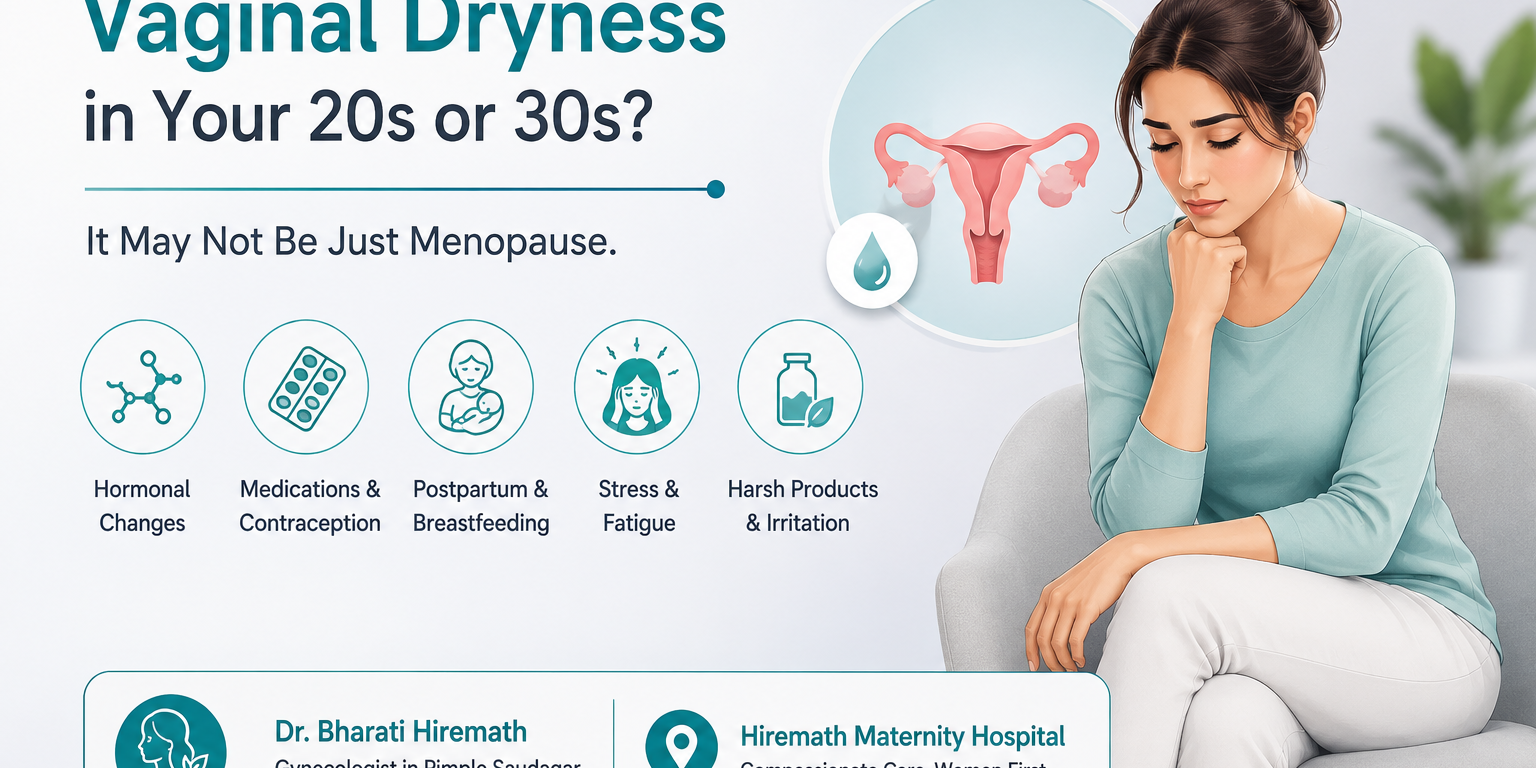
Causes of Vaginal Dryness in Your 20s and 30s
1. Breastfeeding and the Postpartum Period
After childbirth, particularly while breastfeeding, estrogen levels may remain lower than usual for some time. This can lead to vaginal dryness or increased sensitivity.
Some women first notice dryness when they resume intimacy after delivery. The combination of hormonal changes, healing after childbirth and fatigue can contribute.
Symptoms often improve as hormone levels change, but persistent discomfort should be discussed with a gynecologist.
2. Hormonal Contraception
Some women notice changes in vaginal lubrication after starting certain hormonal contraceptives.
This does not happen to everyone, and contraceptive medication should not be stopped without medical guidance. If symptoms began after changing contraception, mention the timing during your consultation.
3. Certain Medicines
Some medications can contribute to dryness in different tissues of the body. Depending on the medicine and individual response, this may include vaginal dryness.
Examples can include certain antihistamines and some medications used for other health conditions.
If you suspect medication is contributing, speak with your doctor rather than stopping prescribed medicine yourself.
4. Stress and Emotional Factors
Stress does not directly explain every case of vaginal dryness, but prolonged stress, fatigue and anxiety can influence physical arousal and natural lubrication.
This is one reason symptoms should be considered in context rather than assuming every case is caused by estrogen deficiency.
5. Irritating Personal Care Products
The vaginal area is sensitive. Products that contain fragrances or harsh ingredients may cause irritation and make dryness, itching or burning feel worse.
Possible triggers include:
- Scented intimate washes or sprays
- Harsh soaps and fragranced products
- Frequent unnecessary cleansing or douching
- Products that irritate sensitive skin
The vagina naturally maintains its own internal environment. Excessive cleansing may disrupt this balance rather than improve hygiene.
Could It Be an Infection Instead of Dryness?
Sometimes what feels like dryness may actually be irritation associated with an infection or inflammatory condition.
Vaginal infections can cause itching, burning, altered discharge, redness or soreness. Because several conditions can produce overlapping symptoms, self-diagnosing based only on discomfort may lead to inappropriate treatment.
For example, repeatedly using over-the-counter antifungal treatment without confirming a yeast infection may not address the actual problem.
A gynecologist can evaluate the symptoms and determine whether testing is required.
Can PCOS or Thyroid Problems Cause Vaginal Dryness?
Hormonal conditions can sometimes influence menstrual cycles and reproductive hormones, although vaginal dryness alone does not mean you have PCOS or a thyroid disorder.
Thyroid disorders may affect menstrual patterns and general well-being. PCOS is more commonly associated with irregular ovulation, androgen-related symptoms and metabolic changes.
If dryness occurs alongside irregular periods, unexplained weight changes, persistent fatigue or other hormonal symptoms, your gynecologist may consider whether further evaluation is appropriate.
When Should You See a Gynecologist?
You do not have to wait until vaginal dryness becomes severe.
Consider seeking medical advice when dryness:
- Continues for several weeks or repeatedly returns
- Causes persistent burning, itching or soreness
- Makes intimacy uncomfortable
- Occurs with unusual discharge, odor or bleeding
- Begins after a medication or hormonal change and remains troublesome
- Is accompanied by significant menstrual changes
Bleeding after intimacy, unexplained pelvic pain or recurrent vaginal symptoms also deserve proper assessment.
How Is Vaginal Dryness Evaluated?
Your gynecologist will usually begin by asking when the symptoms started and whether there are associated symptoms such as itching, discharge, menstrual changes or discomfort.
Questions may also cover contraception, recent childbirth, breastfeeding, medications and products used around the vaginal area.
A pelvic examination may be recommended depending on your symptoms. If an infection is suspected, appropriate testing may be performed.
The goal is not simply to label the symptom as dryness but to understand why it is happening.
What Can Help With Vaginal Dryness?
Treatment depends on the cause.
For mild dryness, avoiding fragranced or irritating products may help. Vaginal moisturizers may provide longer-lasting moisture, while suitable lubricants may reduce friction-related discomfort during intimacy.
When hormonal changes are responsible, treatment needs to be individualized. Your gynecologist can determine whether a hormonal or non-hormonal approach is suitable.
According to ACOG, lubricants and vaginal moisturizers are among the non-hormonal options used to manage vaginal dryness in appropriate situations.
Importantly, persistent itching or burning should not automatically be treated as dryness because infections and skin conditions can cause similar symptoms.
Vaginal Dryness at a Young Age Is Worth Discussing
Being in your 20s or 30s does not rule out vaginal dryness. At the same time, experiencing dryness does not automatically mean you have a serious hormonal disorder.
Often, the explanation is something manageable such as postpartum hormonal changes, medication, irritation or temporary hormonal fluctuations.
The important thing is to pay attention when symptoms persist or interfere with your comfort.
Consult Dr. Bharati Hiremath, Gynecologist in Pimple Saudagar
If vaginal dryness, burning or discomfort keeps returning, a proper gynecological assessment can help identify the cause.
At Hiremath Maternity Hospital, Dr. Bharati Hiremath, Gynecologist in Pimple Saudagar, provides evaluation and individualized guidance for women’s health concerns, including vaginal symptoms, menstrual problems and reproductive health conditions.
Instead of repeatedly treating the symptom yourself, getting the underlying cause evaluated can help guide more appropriate care.
Frequently Asked Questions
1. Is vaginal dryness normal in your 20s?
Vaginal dryness can occur in your 20s due to hormonal changes, breastfeeding, certain medicines, irritation or other factors. Occasional dryness may be temporary, but persistent or painful symptoms should be evaluated by a gynecologist.
2. Can stress cause vaginal dryness?
Stress and anxiety can affect physical arousal and natural lubrication in some women. However, persistent vaginal dryness should not automatically be attributed to stress because hormonal changes, irritation, infection and medications can also contribute.
3. When should I worry about vaginal dryness?
Consider seeing a gynecologist if dryness persists, causes significant discomfort, makes intimacy painful, or occurs with unusual discharge, bleeding, itching, pelvic pain or major menstrual changes.
#vaginaldryness #womenshealth #gynecologistinpimplesaudagar #gynecologist #vaginalhealth #hormonalhealth #womenswellness #pimplesaudagar