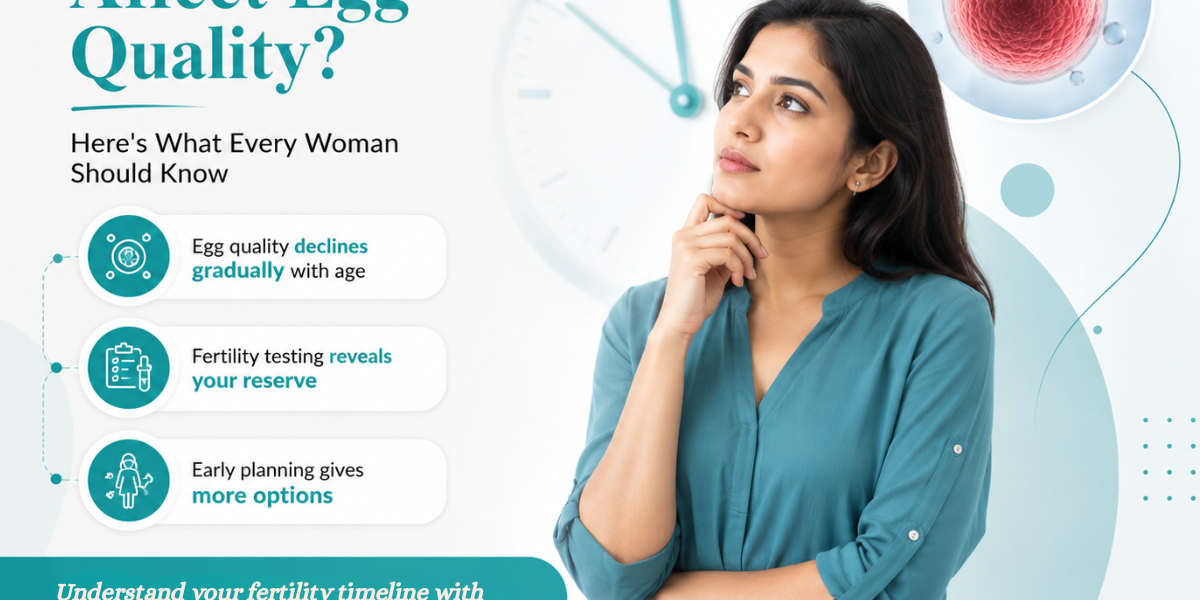
More women today are choosing to build their careers, find the right partner, or simply feel ready on their own timeline before starting a family. That is a good thing, and there is nothing wrong with wanting life to unfold at your own pace. But it also raises a question many women quietly worry about: does waiting longer to get pregnant actually affect egg quality?
The honest answer is yes, to some degree, and understanding how and why can help you make informed decisions rather than fear-driven ones. According to the American College of Obstetricians and Gynecologists (ACOG), fertility begins to decline gradually around age 32 and more noticeably after age 37, largely due to a natural decrease in both the number and quality of eggs. This is not meant to alarm you. It is meant to equip you with real information so you can plan ahead with a gynecologist rather than find out the hard way.
Why Egg Quality Changes With Age
Women are born with all the eggs they will ever have. The American Society for Reproductive Medicine (ASRM) notes that a female fetus has around 6 to 7 million oocytes at 20 weeks of gestation, a number that drops to roughly 1 to 2 million at birth, 300,000 to 500,000 by puberty, and around 25,000 by age 37. Unlike sperm, which the body continuously produces, eggs are not renewed. They age along with you.
As the years pass, the eggs that remain are more likely to develop chromosomal irregularities. This happens because the cellular machinery responsible for dividing chromosomes correctly becomes less reliable with age. It is a biological reality, not a reflection of how healthy or fit you are.
What the Research Actually Shows
It helps to look at the numbers rather than rely on vague warnings about a “ticking clock.” Here is what fertility data consistently shows:
- In your 20s: This is typically considered peak reproductive fertility, with healthy couples having roughly a 25% chance of conceiving in any given cycle.
- After 35: Fertility declines more steeply. ASRM data shows the odds of natural conception drop noticeably compared to your 20s, and the chance of chromosomal abnormalities in eggs rises alongside it.
- By 40: According to ASRM, the chance of natural conception per cycle falls to under 5%, and miscarriage risk climbs, since a large proportion of eggs at this stage may carry chromosomal abnormalities.
This is exactly why ASRM recommends that women under 35 seek a fertility evaluation from a gynecologist after 12 months of trying unsuccessfully to conceive, while women 35 and older are advised to seek help after just 6 months, and women over 40 are encouraged to consult a specialist right away.
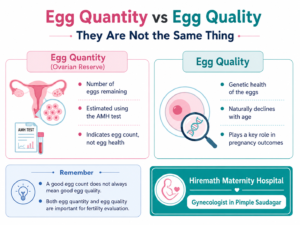
Egg Quantity vs Egg Quality: They Are Not the Same Thing
This is a distinction that often gets lost in casual conversation, but your gynecologist will likely explain it this way:
- Ovarian reserve refers to how many eggs remain. It can be estimated through tests like anti-Mullerian hormone (AMH) levels, though ACOG notes this is a useful but imperfect predictor.
- Egg quality refers to the genetic health and viability of those remaining eggs, which is harder to measure directly and tends to decline with age regardless of how many eggs are left.
A woman can have a seemingly adequate egg count and still face quality-related challenges, which is exactly why relying on ovarian reserve numbers alone can be misleading. This is best discussed in detail with a gynecologist who can interpret your specific results in context.
gynecologist in Pimple Saudagar
What You Can (and Cannot) Control
It is worth being upfront that egg quality decline is primarily age-related and cannot be reversed. However, there are things within your control that support overall reproductive health:
- Maintaining a balanced diet and healthy weight
- Avoiding smoking, which is independently linked to faster ovarian aging
- Managing chronic conditions like thyroid disorders, PCOS, or endometriosis
- Reducing excessive alcohol consumption
- Getting regular checkups with a gynecologist to track your reproductive health proactively rather than reactively
None of these will stop the clock, but they can support better outcomes within whatever timeline works for you.
Should You Consider Egg Freezing?
For women who know they want to delay pregnancy for personal, professional, or medical reasons, egg freezing has become a more accessible option in recent years. Freezing eggs at a younger age preserves them at a point when quality is generally higher, which can be a meaningful option for some women. That said, it is a decision that comes with cost, emotional weight, and no absolute guarantee, so it is best explored through a detailed conversation with a gynecologist rather than a quick online search.
Read More –
- Tips to Improve Egg Quality Naturally
- Genetic Factors and Infertility – Treatment in PCMC Pune
- How Thyroid Affects Pregnancy and Fertility
The Takeaway
Delaying pregnancy does not automatically mean you will struggle to conceive, but it is a factor that deserves honest attention rather than avoidance. The best step you can take, regardless of your age or timeline, is having an open conversation with a gynecologist about your reproductive health so you are making decisions based on facts, not guesswork or fear.
How Hiremath Maternity Hospital Can Help
At Hiremath Maternity Hospital, we know that questions about fertility and egg quality can feel overwhelming, especially when there is so much conflicting information online. Our team offers thorough fertility assessments, ovarian reserve testing, and personalized guidance for women at every stage of their reproductive journey, whether you are planning to conceive now, a few years from now, or simply want clarity on where you stand.
Led by Dr. Bharti Hiremath, a trusted gynecologist in Pimple Saudagar, our clinic focuses on giving women clear, honest answers and a care plan built around their actual goals, not generic advice. If you are searching for a gynecologist in Pimple Saudagar who takes the time to explain your options without rushing you into decisions, we would love to help.
Book a consultation with Dr. Bharti Hiremath at Hiremath Maternity Hospital and get the clarity you deserve about your fertility and family planning journey.
Frequently Asked Questions
- At what age does egg quality start to decline significantly? Egg quality begins declining gradually around age 32 and drops more noticeably after age 37, according to ACOG. This is due to a natural increase in chromosomal abnormalities in the remaining eggs as women age, which a gynecologist can explain further based on your individual fertility profile.
- Can lifestyle changes improve egg quality? Lifestyle changes cannot reverse age-related egg quality decline, but maintaining a healthy weight, avoiding smoking, limiting alcohol, and managing conditions like PCOS or thyroid disorders can support better overall reproductive health. A gynecologist can help you build a plan suited to your specific situation.
- Is egg freezing a good option if I want to delay pregnancy? Egg freezing can be a useful option for women who want to preserve eggs at a younger age when quality is typically higher. However, it involves cost, time, and no guaranteed outcome, so it is best discussed in detail with a gynecologist before making a decision.
#FertilityAwareness #WomensHealth #EggQuality #FamilyPlanning #GynecologyCare #PimpleSaudagarGynecologist #FertilityJourney #WomensWellness