When Should You Consult a Gynaecologist in PCMC?
A missed period often leads to one immediate question: “Could I be pregnant?” When a home pregnancy test is negative, the result may feel confusing, particularly if your cycles are usually regular.
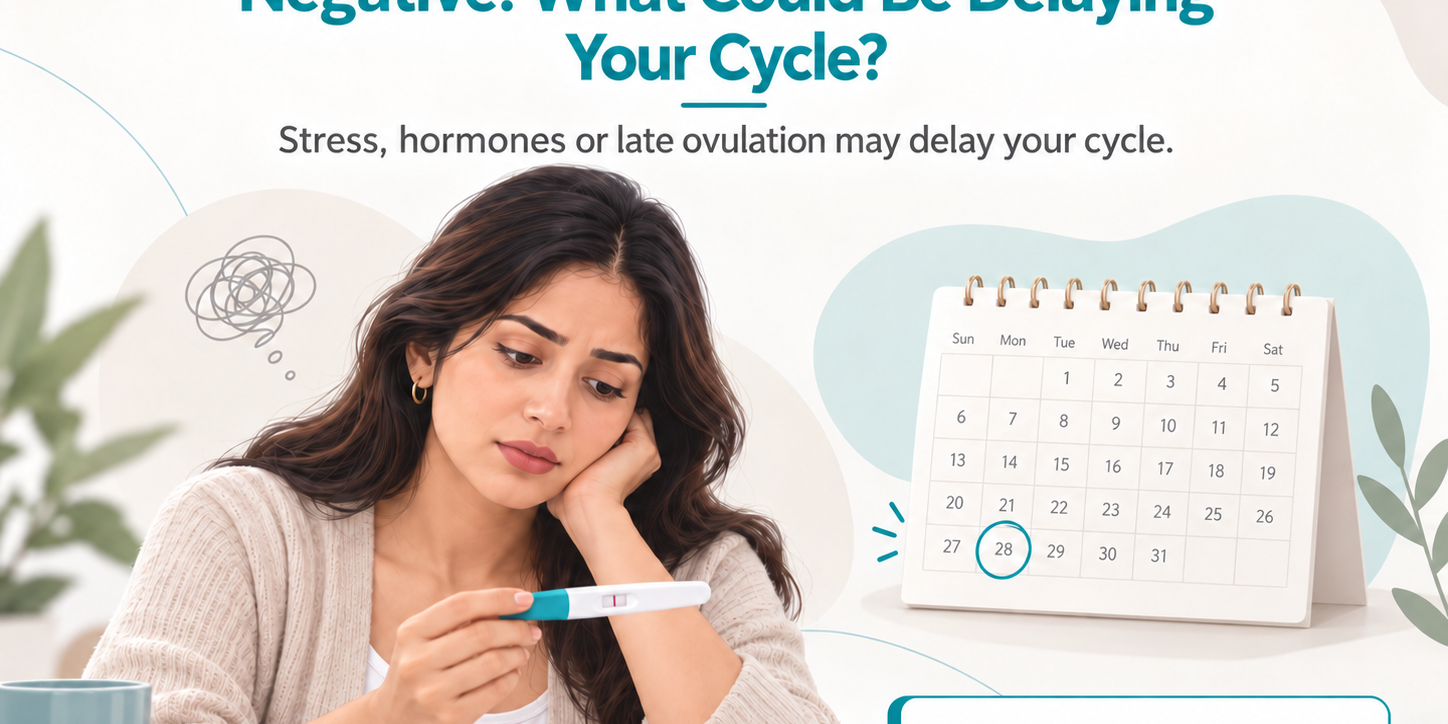
A negative test can mean that you are not pregnant, but it may also occur when the test is taken too early. If pregnancy is ruled out, stress, hormonal changes, polycystic ovary syndrome, thyroid disorders, weight changes and several other factors can delay ovulation and menstruation.
An occasional late period is not always a sign of a serious problem. However, recurring or prolonged changes should be discussed with a gynaecologist, especially when accompanied by pain, abnormal bleeding or other symptoms.
Why Can a Pregnancy Test Be Negative After a Missed Period?
Home pregnancy tests detect human chorionic gonadotropin, commonly called hCG, in urine. The body begins producing this hormone after a fertilised egg implants.
A false-negative result may occur if:
- The test was performed too early.
- Ovulation happened later than expected, making the pregnancy earlier than calculated.
- The urine was diluted after drinking a large amount of fluid.
- The test was expired, stored incorrectly or used differently from the instructions.
- The result was checked too soon or outside the recommended reading time.
The NHS recommends waiting a few days and repeating the test if the result is negative but pregnancy is still suspected. Medical advice is recommended if a second test is negative and the period has not arrived.
When repeating an early test, using the first urine of the morning may help because it is usually more concentrated. Follow the timing and reading instructions provided with the specific test kit.
Common Causes of a Delayed Period When You Are Not Pregnant
The menstrual cycle depends on communication between the brain, pituitary gland, ovaries and uterus. A change affecting any part of this system can delay ovulation or prevent a period.
- Stress: Emotional pressure, poor sleep, grief, examinations, work demands or a major life change can affect the hormonal signals that control ovulation. When ovulation is delayed, the period also arrives later.
- Polycystic ovary syndrome: PCOS is a hormonal and metabolic condition that can cause irregular or absent ovulation. Other possible signs include acne, increased facial or body hair, scalp hair thinning, weight gain or difficulty becoming pregnant. PCOS can also occur in women who are not overweight.
- Sudden weight loss or low calorie intake: Rapid weight loss, restrictive diets or inadequate nutrition can reduce the energy available for reproductive functions. This may interfere with ovulation and stop or delay periods.
- Weight gain or obesity: Changes in body weight can affect insulin and reproductive hormones. The US Office on Women’s Health notes that obesity can contribute to missed, irregular or heavy periods through its effect on oestrogen.
- Intense exercise: Heavy training combined with inadequate calorie intake can disrupt menstrual cycles. The Endocrine Society identifies stress, weight loss and excessive exercise as common factors associated with functional hypothalamic amenorrhoea.
- Thyroid disorders: Both an underactive and overactive thyroid may affect menstrual regularity. Symptoms can include tiredness, unexplained weight changes, constipation, a rapid heartbeat, temperature sensitivity or changes in hair and skin.
- Raised prolactin levels: Prolactin is involved in breast milk production. Abnormally high levels outside pregnancy or breastfeeding can interfere with ovulation. Some women may notice a milky breast discharge, headaches or visual changes.
- Hormonal contraception: Birth control pills, injections, implants and hormonal intrauterine devices can change bleeding patterns. Periods may become lighter, irregular or absent. It can also take time for cycles to settle after stopping some methods. The National Institute of Child Health and Human Development confirms that certain hormonal contraceptives can cause missed periods and that cycle regularity may take several months to return after discontinuation.
- Breastfeeding: Prolactin levels remain higher while breastfeeding and may delay the return of ovulation and periods. Pregnancy is still possible before the first period returns, so contraception may be required.
- Perimenopause: In the years before menopause, ovulation may become less predictable. Periods can become early, late, lighter, heavier or occasionally absent. A gynecologist can assess whether changes are consistent with perimenopause or require further investigation.
- Chronic illness or certain medicines: Uncontrolled diabetes, significant illness and some medicines can affect the cycle. Never stop prescribed treatment without speaking to the clinician who prescribed it.
Could You Still Be Pregnant?
Yes, an early pregnancy is still possible after one negative test, particularly when menstrual cycles are irregular or ovulation occurred later than expected.
Repeat the home pregnancy test after a few days if the period has not started. If it remains negative, a gynecologist may recommend a blood pregnancy test depending on your dates and symptoms.
Do not rely only on a home test if you have concerning pain or bleeding. An ectopic pregnancy occurs when a pregnancy develops outside the uterus, usually in a fallopian tube. It can become serious if it ruptures.
According to the American College of Obstetricians and Gynecologists, warning symptoms can include severe abdominal or pelvic pain, shoulder pain, weakness, dizziness or fainting.
When Should You Consult a Gynecologist?
Consider arranging an appointment if:
- Your period remains absent despite repeated negative pregnancy tests.
- You have missed three consecutive periods.
- Your previously regular cycles have suddenly become irregular.
- Missed periods are occurring repeatedly.
- You have acne, increased facial hair or scalp hair thinning.
- You have significant weight loss, weight gain or restrictive eating habits.
- You notice a milky breast discharge when not breastfeeding.
- You are experiencing hot flushes, vaginal dryness or other early menopausal symptoms.
- You are trying to conceive and your cycles are unpredictable.
- You have a history of thyroid disease, PCOS or elevated prolactin.
The American College of Obstetricians and Gynecologists explains that missing periods can be related to pregnancy, breastfeeding, menopause, medical conditions or medicines. The correct treatment depends on identifying the cause.
How Does a Gynecologist Investigate a Missed Period?
The evaluation begins with your menstrual history. Your doctor may ask when your last period started, whether your cycles are usually regular, when you performed pregnancy tests and whether you use contraception.
Additional questions may cover weight changes, exercise, stress, medicines, sexual history and symptoms such as acne, unwanted hair growth, breast discharge or pelvic pain.
A clinical evaluation may include a pregnancy test, thyroid function testing, prolactin, reproductive hormone tests or blood sugar assessment. Pelvic ultrasound may be recommended when PCOS, an ovarian cyst, a uterine condition or another pelvic cause is suspected.
The American Society for Reproductive Medicine recommends a stepwise evaluation after pregnancy has been excluded. It identifies medical history, reproductive hormone testing and pelvic ultrasound as useful parts of the assessment.
Not every patient needs every test. A gynecologist selects investigations according to the menstrual pattern and associated symptoms.
What Information Should You Record Before the Appointment?
Keeping a brief record can make the consultation more useful:
- Write down the first day of your last three to six periods.
- Record the dates and results of pregnancy tests.
- Note recent changes in weight, exercise, sleep or stress.
- List all medicines, supplements and contraception.
- Record symptoms such as pain, discharge, acne, hair changes or abnormal bleeding.
Avoid taking hormonal tablets to bring on a period without medical advice. Such medicines may not be suitable for everyone and could mask the underlying cause.
Seek Urgent Medical Care for These Symptoms
Obtain urgent medical help if a missed period occurs with:
- Sudden or severe abdominal or pelvic pain, particularly on one side
- Shoulder-tip pain
- Heavy vaginal bleeding
- Severe dizziness, fainting, weakness or unusual paleness
- Fever with pelvic pain
- A positive or uncertain pregnancy result combined with pain or bleeding
The NHS advises seeking medical advice for symptoms that may suggest ectopic pregnancy even when a pregnancy test has not been positive.
Treatment Depends on What Is Delaying the Cycle
There is no single medicine for every missed period. Treatment may involve addressing PCOS, managing a thyroid disorder, correcting high prolactin, reviewing contraception or improving nutrition and energy balance.
Stress management and changes to exercise may help when lifestyle factors are affecting ovulation. If pregnancy is desired, treatment may also focus on restoring or supporting ovulation.
The aim is not simply to produce one episode of bleeding. It is to understand why the menstrual cycle changed and whether the underlying cause needs ongoing care.
Consult Dr. Bharti Hiremath at Hiremath Hospital.
A missed period with a negative pregnancy test can have several explanations. Instead of repeatedly testing or taking hormonal medicine independently, a proper evaluation can help identify whether the delay is related to pregnancy timing, PCOS, thyroid function, stress, weight changes or another condition.
At Hiremath Hospital, Dr. Bharti Hiremath provides evaluation and individual guidance for delayed, irregular and absent periods. If you are searching for a gynecologist in PCMC, you can consult Dr. Bharti Hiremath to discuss your symptoms, appropriate testing and treatment options based on the identified cause.
This article is intended for general education and does not replace a medical consultation, diagnosis or emergency care.
Frequently Asked Questions
1. How many days after a missed period should I repeat a pregnancy test?
If the first pregnancy test is negative but your period has not started, repeat it after a few days while following the test instructions carefully. If the second test remains negative and the period is still absent, consult a gynecologist for further assessment.
2. Can stress delay a period for several weeks?
Yes. Significant emotional or physical stress can delay ovulation, which delays the next period. However, pregnancy and medical causes such as PCOS or thyroid disorders should also be considered when the delay persists or occurs repeatedly.
3. Can PCOS cause a missed period with a negative pregnancy test?
Yes. PCOS can interfere with regular ovulation, leading to delayed, irregular or absent periods. A negative pregnancy test does not diagnose PCOS. A gynecologist may assess menstrual history, symptoms, hormone levels and ultrasound findings before confirming the condition.
#missedperiod #negativepregnancytest #irregularperiods #menstrualhealth #gynecologist #gynecologistinpcmc #pcosawareness #womenshealth #hormonalhealth #hiremathhospital