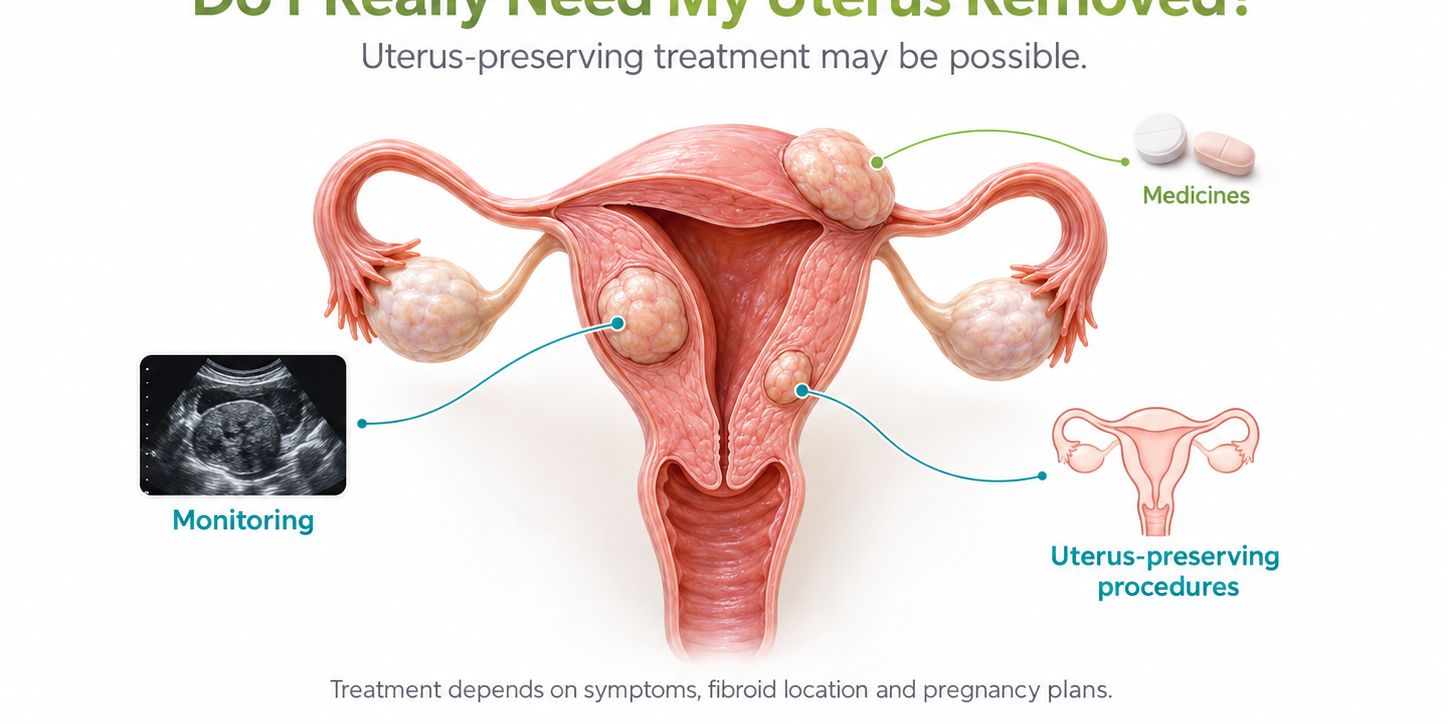
No, being diagnosed with uterine fibroids does not automatically mean that your uterus needs to be removed. Many women can manage fibroids with regular monitoring, medicines or treatments that preserve the uterus. Hysterectomy, which is surgery to remove the uterus, is generally considered when fibroids cause significant symptoms, other treatments are unsuitable or ineffective, or a woman prefers a permanent solution.
Hearing that you have fibroids can be worrying, particularly if you are concerned about future pregnancy, menstrual health or undergoing major surgery.
However, the right treatment depends on several factors, including the size, number and location of the fibroids, the severity of your symptoms, your age and whether you want to preserve your fertility.
Understanding your options can help you make an informed decision rather than assuming that hysterectomy is the only solution.
What Are Uterine Fibroids, and Are They Dangerous?
Uterine fibroids, also called leiomyomas or myomas, are non-cancerous growths that develop in or around the muscular wall of the uterus.
They can vary considerably in size. Some are very small and discovered accidentally during ultrasound examinations, while others become large enough to cause pressure on nearby organs.
Fibroids are usually benign and are not considered precancerous growths. A rare uterine cancer called leiomyosarcoma may sometimes resemble a fibroid, but ordinary fibroids are not generally thought to develop into this cancer.
According to the American College of Obstetricians and Gynecologists (ACOG), many women with fibroids experience no symptoms and may not need treatment.
When symptoms occur, they may include heavy menstrual bleeding, painful periods, pelvic pressure, frequent urination or constipation.
The presence of a fibroid alone is not enough to determine whether surgery is necessary.
When Can Uterine Fibroids Be Left Untreated?
If your fibroids are not causing noticeable symptoms, immediate treatment may not be required.
A gynaecologist may recommend observation, sometimes called watchful waiting, particularly when the fibroids are not affecting daily activities or reproductive health.
This approach involves monitoring symptoms and arranging further examinations or ultrasound scans when clinically appropriate.
Some fibroids remain stable for years, while others may grow or shrink.
Fibroids may also become smaller after menopause because of changes in reproductive hormone levels, although this does not happen in every woman.
The NHS guidance on fibroids confirms that treatment is not always necessary when fibroids are not causing problems.
However, changes in bleeding, pain or pressure symptoms should be reviewed rather than automatically attributed to an existing fibroid.
When Might a Hysterectomy Be Recommended for Fibroids?
A hysterectomy may be considered when fibroids significantly affect quality of life and other suitable treatments have not provided adequate relief.
For example, persistent heavy bleeding may cause iron deficiency anaemia, leaving a woman feeling unusually tired, weak or breathless.
Large fibroids may also produce ongoing pelvic pressure, discomfort or problems with bladder and bowel function.
Your doctor may discuss hysterectomy when:
- Symptoms are severe or persistent: Heavy bleeding, pain or pressure continues despite appropriate treatment.
- Other treatments are unsuitable or unsuccessful: Medicines or uterus-preserving procedures are unlikely to provide sufficient relief.
- A permanent treatment is preferred: The woman does not wish to become pregnant and chooses definitive treatment after understanding the alternatives.
Hysterectomy removes the uterus, so uterine fibroids cannot recur. However, it is a major operation with possible risks, including bleeding, infection and injury to nearby organs.
The NICE guideline on heavy menstrual bleeding recommends discussing treatment alternatives, complications, fertility and personal preferences before deciding on hysterectomy.
Can Uterine Fibroids Be Treated Without Removing the Uterus?
Yes. Several treatments can help manage fibroid symptoms while preserving the uterus.
However, these options differ in how they work and whether they are suitable for women planning pregnancy.
1. Medicines to Control Heavy Bleeding and Pain
Certain medicines can reduce symptoms without removing the fibroids.
Tranexamic acid may help reduce heavy menstrual bleeding. Anti-inflammatory pain medicines may help with menstrual pain and, in some cases, bleeding.
Hormonal treatments, including selected contraceptive medicines and a hormonal intrauterine system, may also be considered.
These treatments do not necessarily shrink or remove fibroids.
Other prescribed hormonal medicines, such as selected gonadotrophin-releasing hormone (GnRH) treatments, can temporarily reduce fibroid-related symptoms and sometimes fibroid size.
However, treatment suitability depends on medical history, side effects and pregnancy plans.
2. Myomectomy: Removing Fibroids While Keeping the Uterus
Myomectomy is surgery that removes fibroids while leaving the uterus in place.
It may be particularly relevant for women who want to preserve the possibility of pregnancy or prefer not to undergo hysterectomy.
Depending on the fibroids’ size and location, myomectomy may be performed through hysteroscopy, laparoscopy or open abdominal surgery.
However, myomectomy carries risks, including bleeding, infection and scar tissue formation. New fibroids may develop after surgery.
Some women may also require Caesarean delivery in a future pregnancy, depending on the extent of uterine surgery.
3. Uterine Artery Embolisation
Uterine artery embolisation (UAE) is a procedure performed by an interventional radiologist.
It involves blocking selected blood vessels supplying the fibroids, causing them to shrink over time.
According to ACOG’s guidance on uterine artery embolisation, this procedure can reduce fibroid-related bleeding and pressure symptoms in selected women.
However, some patients need additional treatment later.
Its effects on future pregnancy and ovarian function must also be discussed, particularly if pregnancy is planned.
Preserving the uterus does not mean that every procedure preserves fertility equally well.
Which Treatment Is Better if You Want to Become Pregnant?
If you are planning pregnancy, preserving the uterus and considering the effect of fibroids on fertility become especially important.
Not all fibroids interfere with conception.
Those that distort the uterine cavity, particularly certain submucosal fibroids, may affect implantation or pregnancy outcomes.
Fibroids located on the outer surface of the uterus may have less impact on fertility, depending on their characteristics.
Myomectomy may be considered when a fibroid is likely to interfere with fertility or pregnancy.
However, surgery itself can have risks, and removing every fibroid does not necessarily improve the chances of conception.
Hysterectomy permanently removes the ability to carry a pregnancy, while pregnancy after uterine artery embolisation has additional uncertainties and potential risks.
The NICE guidelines recommend discussing fertility goals before choosing fibroid surgery or embolisation.
For more information about fibroid-related symptoms and diagnosis, read Hiremath Hospital’s guide to uterine fibroids.
Does the Size of a Fibroid Decide Whether the Uterus Must Be Removed?
No. Fibroid size is important, but it is not the only factor.
A relatively small fibroid growing into the uterine cavity may cause significant menstrual bleeding.
Meanwhile, a larger fibroid on the outer surface of the uterus may cause fewer symptoms.
Doctors also assess how many fibroids are present, whether they distort the uterus and whether they affect nearby organs.
A pelvic ultrasound is commonly used to identify these characteristics.
In selected cases, an MRI scan or hysteroscopy may provide additional information before treatment.
A blood count may be recommended when heavy periods raise concern about anaemia.
The aim is to select a treatment based on the complete clinical picture rather than deciding on hysterectomy from one ultrasound measurement.
Will Removing the Uterus Cause Early Menopause?
Not necessarily.
A hysterectomy removes the uterus, but the ovaries may be preserved.
If the ovaries remain, they usually continue producing hormones, and menopause does not automatically begin immediately after surgery.
However, ovarian function may decline earlier in some women after hysterectomy.
If both ovaries are removed, menopause begins immediately in someone who has not already reached menopause.
According to ACOG’s hysterectomy guidance, the decision to remove the ovaries is separate from the decision to remove the uterus.
Before surgery, ask whether the procedure involves removing the uterus alone or also removing the cervix, fallopian tubes or ovaries.
What Should You Discuss Before Agreeing to Hysterectomy?
If hysterectomy has been recommended, ask your gynaecologist to explain why it is the preferred treatment in your situation.
Useful questions include:
- Where are my fibroids located, and which ones are causing symptoms?
- Can medicines, myomectomy or another procedure manage my condition?
- What happens if I choose monitoring instead of immediate surgery?
- How will the recommended treatment affect fertility, recovery and long-term health?
- What are the risks of surgery, and will my ovaries be preserved?
Seeking a second medical opinion is reasonable when you are uncertain about a major, irreversible procedure.
There is no need to feel pressured into making an immediate decision unless your condition requires urgent medical intervention.
When Do Fibroid Symptoms Need Urgent Attention?
Most fibroid-related concerns can be assessed through a planned gynaecological appointment.
However, unusually heavy bleeding accompanied by dizziness, fainting, chest pain or breathlessness requires urgent medical attention.
Sudden severe pelvic or abdominal pain should also be evaluated promptly, particularly when accompanied by vomiting or fever.
Bleeding after menopause requires medical assessment even if fibroids have previously been diagnosed.
These symptoms may have causes other than fibroids and should not automatically be attributed to existing ultrasound findings.
Frequently Asked Questions
1. Can Uterine Fibroids Shrink Without Surgery?
Yes. Some fibroids become smaller after menopause, and certain prescribed hormonal treatments can temporarily reduce their size. However, not every fibroid shrinks, and medicines do not provide a permanent solution for everyone.
2. Can Fibroids Come Back After Myomectomy?
Yes. Myomectomy removes existing fibroids, but new fibroids can develop later. The possibility of further treatment depends on factors such as age, number of fibroids and symptoms.
3. Is Hysterectomy the Best Treatment for Multiple Fibroids?
Not automatically. Hysterectomy may be appropriate for some women with multiple large or symptomatic fibroids, particularly when they want definitive treatment. However, alternatives may still be available depending on fibroid location, medical history and fertility preferences.
Conclusion
Being diagnosed with uterine fibroids does not automatically mean that your uterus must be removed.
Many women can manage fibroids through monitoring, medicines or uterus-preserving procedures. Hysterectomy remains an effective treatment for selected patients, but the decision should consider symptoms, fibroid characteristics, reproductive goals and individual preferences.
If you have been advised to undergo hysterectomy or want to understand your alternatives, consult Dr. Bharati Hiremath at Hiremath Maternity Hospital for an individual assessment and discussion of suitable treatment options.
For personalised women’s health guidance, consult a Gynecologist in Pimple Saudagar to review your ultrasound findings and understand whether monitoring, medicines or surgery is appropriate for your condition.