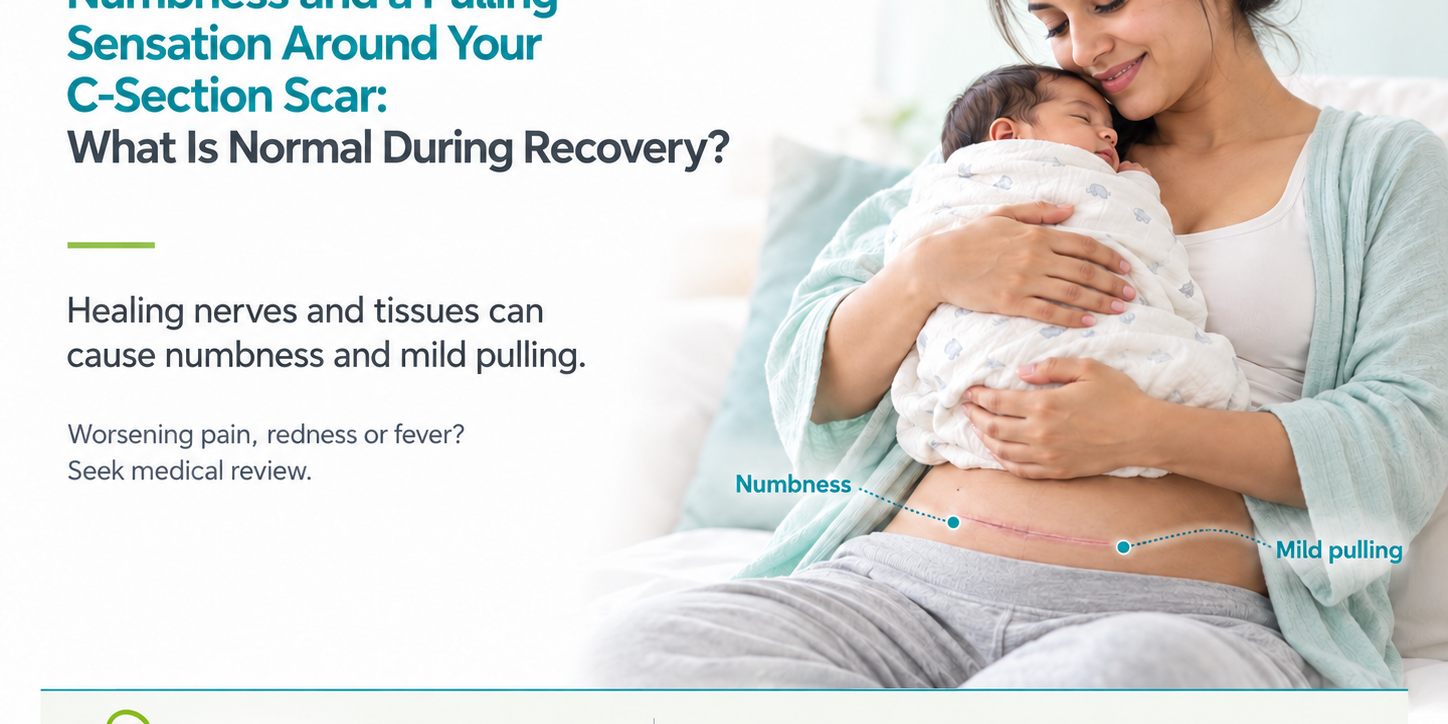
Numbness, mild tenderness and a pulling sensation around your C-section scar can be normal during recovery. These sensations often happen because the skin, small nerves and deeper abdominal tissues are healing after surgery. Some women notice tightness when standing, stretching, coughing or getting out of bed, while others experience reduced sensation around the scar for several months.
However, not every change should be considered normal. Increasing pain, redness, swelling, discharge or fever may indicate a complication that needs medical attention.
Understanding how a Caesarean incision heals can help you recognise expected recovery changes and know when to consult your gynaecologist.
Why Does Your C-Section Scar Feel Numb After Surgery?
During a Caesarean section, the surgeon makes incisions through the abdominal wall and uterus to deliver the baby.
Small sensory nerves in the skin and surrounding tissues may be stretched or divided during the operation.
These nerves help transmit sensations such as touch, pressure and temperature to the brain.
As the area heals, nerve signals may be temporarily disrupted, causing numbness or reduced sensitivity near the incision.
Some women describe the skin just above the scar as feeling different from the rest of their abdomen. Others notice tingling or unusual sensitivity when clothing touches the area.
According to St George’s University Hospitals NHS Foundation Trust, numbness above a Caesarean scar is common and can continue for weeks or months. In some women, normal sensation does not return completely.
Numbness alone, especially when the wound looks healthy and discomfort is improving, does not automatically indicate a complication.
Why Do You Feel Pulling or Tightness Around Your C-Section Scar?
A pulling sensation often develops because healing tissues are gradually forming scar tissue.
When the body repairs an incision, it produces collagen fibres that help close and strengthen the injured area.
Unlike normal skin, scar tissue may initially feel less flexible. As a result, everyday movements can produce sensations of stretching, tugging or tightness.
You may notice this discomfort when standing upright, turning in bed, reaching upwards or getting up from a chair.
Some pulling is expected during early healing. However, persistent tightness can occasionally be associated with reduced movement between the scar and the surrounding tissues.
The Kingston and Richmond NHS Foundation Trust explains that scar tissue can sometimes attach to nearby tissues, producing pulling sensations and discomfort during movement.
This does not mean every pulling sensation is caused by abnormal adhesions.
A medical assessment may be necessary if the tightness becomes painful, restricts movement or continues to interfere with daily activities.
How Long Does Numbness Last After a C-Section?
The duration of numbness varies between women.
During the first few weeks, the incision and surrounding skin may feel tender, swollen or less sensitive.
As healing progresses, some sensation may gradually return. However, nerve recovery can be slow, and numbness may remain noticeable for several months.
In some cases, a small area of reduced sensation persists permanently.
The appearance of the scar also changes over time.
Initially, the incision may look pink, red or slightly raised. As the scar matures, it often becomes flatter and less noticeable.
The Calderdale and Huddersfield NHS Foundation Trust notes that a Caesarean scar generally takes approximately six weeks to heal, although scar maturation and changes in appearance can continue for up to two years.
Skin healing, nerve recovery and deeper tissue recovery do not necessarily happen at the same speed.
Is a Pulling Sensation Normal Six Weeks After a C-Section?
Mild pulling or tightness can still occur six weeks after Caesarean delivery, particularly when movement places tension on healing abdominal tissues.
Although the outer incision may have healed, deeper structures can continue recovering.
Some women experience occasional discomfort during activities involving stretching, lifting or changing position.
However, pain should generally become more manageable rather than progressively worse.
By this stage, your postnatal examination provides an opportunity to discuss persistent tenderness, scar sensitivity and difficulty returning to normal activities.
According to the NHS guidance on Caesarean recovery, recovery takes time, and activities should be resumed gradually based on comfort and medical advice.
If the pulling sensation is becoming stronger, causing sharp pain or preventing ordinary movements, it should be evaluated rather than dismissed as routine healing.
Can Scar Tissue or Adhesions Cause Pain Months After Delivery?
Yes. Some women experience persistent discomfort related to scar tissue after the initial recovery period.
Adhesions occur when scar tissue causes normally separate tissues to stick together.
These changes can sometimes contribute to tightness or reduced mobility around the surgical area.
However, internal adhesions cannot be diagnosed simply because a scar feels tight.
Persistent pain may also involve irritated nerves, abdominal muscle problems, pelvic floor dysfunction or other conditions unrelated to the scar itself.
A small number of women experience long-lasting pain after Caesarean delivery.
The Royal College of Obstetricians and Gynaecologists (RCOG) recognises persistent discomfort and internal scar tissue as possible consequences of Caesarean surgery.
If discomfort continues for several months or begins affecting your activities, your gynaecologist may recommend further assessment.
Can Tingling, Burning or Sharp Pain Around the Scar Be Normal?
Temporary tingling or unusual skin sensitivity may occur during healing.
However, sharp, burning or electric shock-like pain can sometimes suggest irritation of small nerves around the incision.
This type of pain may feel different from ordinary wound soreness.
It can occur when clothing touches the scar, during certain movements or without an obvious trigger.
Mild symptoms that gradually improve may settle with time, but persistent or worsening nerve-like pain deserves medical attention.
A clinician may examine the scar and surrounding abdomen to identify whether the discomfort appears related to the skin, nerves, muscles or another cause.
Do not repeatedly press or deeply massage a painful area in an attempt to restore sensation.
What Can Help Reduce Tightness and Discomfort During C-Section Recovery?
Recovery should focus on protecting the wound while gradually restoring comfortable movement.
The following measures may help:
- Move gently and regularly: Short walks and gradual movement can support recovery without placing excessive strain on healing tissues.
- Reduce pressure on the incision: Wear comfortable clothing, support your abdomen when coughing and use a side-rolling movement when getting out of bed.
- Follow your prescribed pain management plan: Use medicines as directed and discuss persistent discomfort with your doctor, particularly if you are breastfeeding.
Avoid returning too quickly to heavy lifting, strenuous abdominal exercises or activities that increase pain.
The American College of Obstetricians and Gynecologists (ACOG) recommends appropriate pain relief and practical measures to reduce pressure on the incision during early recovery.
If movement remains difficult, your doctor may consider referring you to a physiotherapist experienced in postnatal recovery.
When Can You Start Massaging Your C-Section Scar?
Scar massage may help improve comfort and tissue movement after the incision has completely healed.
However, it should not be started while the wound is open, scabbed, infected or producing discharge.
The Kingston and Richmond NHS guidance advises that Caesarean scars are often fully healed around six to eight weeks after delivery. It recommends checking with a healthcare professional if you are uncertain whether massage is appropriate.
Once healing is confirmed, gentle massage may be suggested to improve scar mobility and reduce sensitivity.
However, research on the effectiveness of scar massage remains limited, and results vary.
Stop if massage causes pain, bleeding or irritation.
Do not use aggressive pressure or unverified scar-removal treatments. A physiotherapist or doctor can explain suitable techniques based on your stage of recovery.
What Signs Around a C-Section Scar Are Not Normal?
Although some discomfort is expected, certain changes need prompt medical assessment.
Contact your maternity team or doctor if you notice increasing redness, warmth, swelling, worsening pain, pus, an unpleasant smell or the wound starting to open.
Fever or chills alongside scar discomfort may indicate infection.
A new bulge near the incision, particularly one that becomes more noticeable when coughing or standing, should also be examined because it may occasionally indicate an incisional hernia.
Seek emergency care if you develop severe abdominal pain, heavy bleeding, chest pain, difficulty breathing, fainting or significant leg swelling with pain.
According to the NHS Caesarean recovery guidance, wound infection, heavy bleeding and blood clot symptoms are important complications to recognise after delivery.
These symptoms should not be managed solely through home remedies or routine scar massage.
When Should You Discuss Scar Numbness With Your Gynaecologist?
You do not need to wait until the pain becomes severe before seeking medical advice.
A review may be helpful if numbness is accompanied by persistent burning, increasing tenderness or significant discomfort during normal movements.
Your doctor may assess the scar’s appearance, surrounding skin sensitivity and whether there is any swelling or abdominal wall weakness.
Depending on the findings, additional investigations may be considered, although many women do not require scans or extensive testing.
Even when no complication is identified, discussing your concerns can help you understand the expected recovery pattern and appropriate ways to return to daily activities.
Frequently Asked Questions
1. Is It Normal for My C-Section Scar to Still Feel Numb After Six Months?
Yes. Some women continue experiencing reduced sensation around their Caesarean scar for six months or longer. Nerve recovery varies, and a small numb area may persist. However, new numbness accompanied by increasing pain, weakness or other unusual symptoms should be assessed.
2. Why Does My C-Section Scar Pull When I Stand Straight or Stretch?
The pulling sensation may result from healing scar tissue and reduced flexibility around the abdominal incision. It can become more noticeable during stretching or changes in position. If the discomfort is worsening, severe or limiting movement, consult your gynaecologist.
3. Can Scar Massage Completely Remove C-Section Tightness?
Not always. Gentle scar massage may improve comfort and tissue mobility after the wound has fully healed, but it cannot guarantee removal of scar tissue or complete relief from tightness. Persistent pain may require assessment and other treatment.
Conclusion
Numbness and a mild pulling sensation around a C-section scar are common during recovery. These changes may result from healing nerves, scar tissue formation and reduced flexibility around the incision.
For many women, discomfort gradually improves as healing progresses. However, persistent severe pain, increasing tenderness, swelling, discharge or other unusual symptoms should not be ignored.
If you are concerned about numbness, scar tightness or discomfort after Caesarean delivery, consult Dr. Bharati Hiremath at Hiremath Maternity Hospital for an individual postnatal assessment and guidance on safe recovery.
For personalised postpartum care and guidance from a Caesarean section specialist in Pimple Saudagar, discuss your scar-related symptoms and recovery concerns with a qualified gynaecologist.