
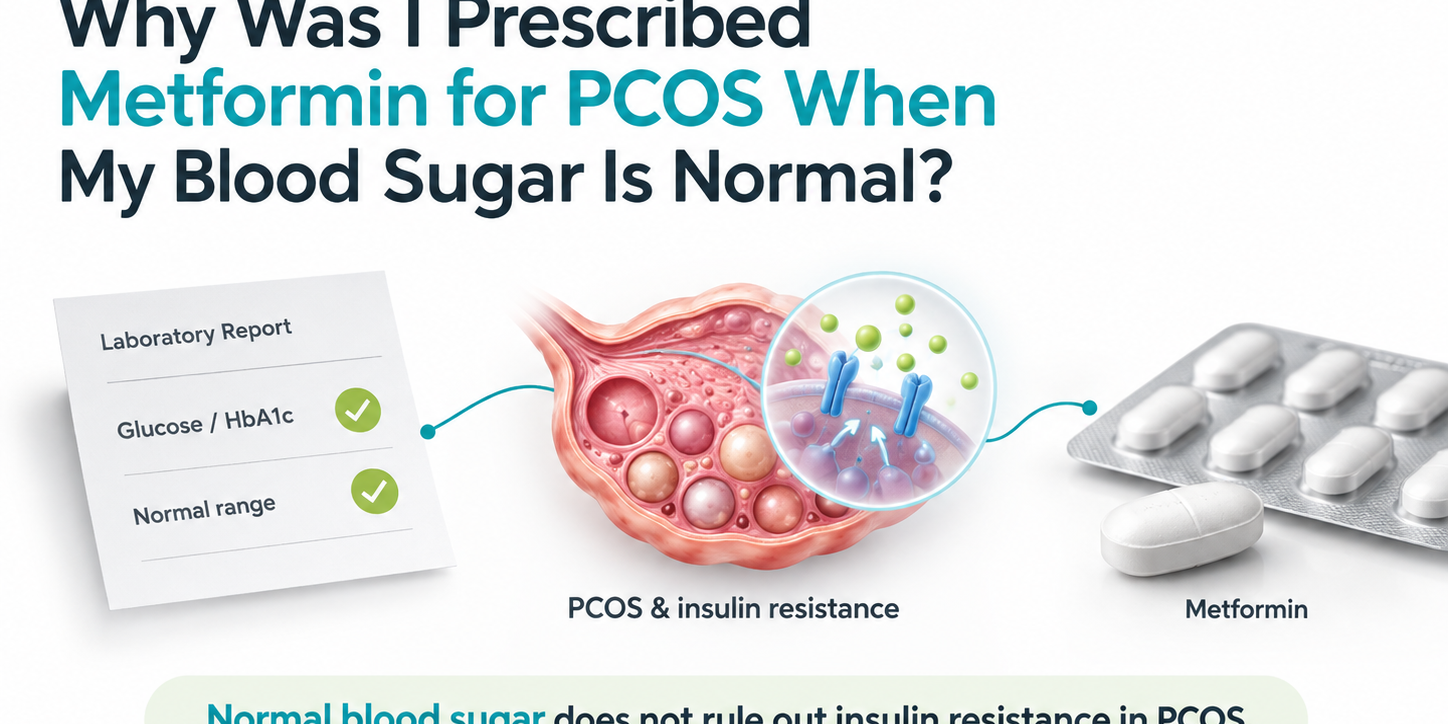
Yes, metformin can be prescribed for Polycystic Ovary Syndrome (PCOS) even when your blood sugar levels are normal. Although metformin is commonly used to treat type 2 diabetes, it can also help manage certain metabolic problems associated with PCOS, particularly insulin resistance. In selected women, it may also help improve menstrual regularity and ovulation.
If your fasting blood sugar or HbA1c report is normal, being prescribed a diabetes medicine may seem confusing. However, a normal blood sugar result does not necessarily mean your body is responding to insulin normally.
Understanding why your gynaecologist recommended metformin can help you know what the medicine may achieve, what its limitations are and whether it is suitable for your individual condition.
Why Is Metformin Prescribed for PCOS Without Diabetes?
PCOS is a hormonal and metabolic condition that can affect menstrual cycles, ovulation, skin health and the way the body processes glucose.
One common feature of PCOS is insulin resistance. This means the body’s cells do not respond to insulin as effectively as expected.
Insulin is a hormone that helps glucose move from the bloodstream into cells, where it can be used for energy.
When cells become less responsive, the body may produce additional insulin to help maintain normal blood sugar levels.
As a result, some women with PCOS can have normal blood glucose readings while still experiencing insulin resistance.
Metformin improves the body’s response to insulin and reduces glucose production by the liver. These effects can help address certain metabolic concerns associated with PCOS.
According to the 2023 International Evidence-based Guideline for PCOS, metformin should be considered for metabolic outcomes in adults with PCOS and a body mass index (BMI) of 25 or higher.
However, metformin is not necessary for every woman with PCOS, and treatment decisions should consider individual symptoms and health risks.
Can You Have Insulin Resistance Even if Your Blood Sugar Is Normal?
Yes. Insulin resistance and high blood sugar are related, but they are not the same condition.
During the earlier stages of insulin resistance, the pancreas may produce enough additional insulin to keep blood glucose within the normal range.
This means a normal fasting blood sugar result does not always reveal the complete metabolic picture.
Over time, some people develop impaired glucose tolerance or type 2 diabetes, although this does not happen to everyone with PCOS.
The international PCOS guideline recognises an increased risk of glucose abnormalities and type 2 diabetes in women with PCOS, regardless of age or body weight.
Importantly, routine insulin blood tests are not recommended simply to confirm insulin resistance because commonly available measurements have limited clinical usefulness.
Your gynaecologist will usually consider your medical history, metabolic risk factors and appropriate glucose tests when deciding whether metformin may be beneficial.
What Are the Possible Benefits of Metformin for PCOS?
Metformin may be recommended for several reasons, depending on the symptoms and metabolic concerns being addressed.
1. Improving Insulin Sensitivity
Metformin helps the body respond more effectively to insulin.
For women with PCOS who have metabolic risk factors, this may improve glucose regulation and certain metabolic measurements.
However, the extent of improvement varies, and metformin does not eliminate the underlying tendency towards insulin resistance.
2. Supporting More Regular Menstrual Cycles
Some women with PCOS experience irregular or missed periods because ovulation does not occur consistently.
Metformin may improve ovulation and menstrual regularity in selected patients.
However, it is not the most effective treatment for every menstrual or hormonal symptom.
The 2023 PCOS recommendations explain that combined oral contraceptive pills may be preferred for irregular periods and excess facial or body hair when pregnancy is not being planned and the medicines are medically suitable.
Metformin may be considered when hormonal contraceptives are unsuitable, not tolerated or declined.
3. Addressing Certain Metabolic Risk Factors
Metformin can have modest benefits for some metabolic measurements, including glucose and lipid profiles.
It may also have a modest effect on weight in some women.
However, metformin is not primarily a weight-loss medicine, and significant weight reduction should not be expected from the tablet alone.
Lifestyle measures remain an important part of PCOS management, whether or not medicine is prescribed.
Does Every Woman With PCOS Need Metformin?
No. PCOS does not automatically require metformin.
The decision depends on factors such as body weight, metabolic risk, menstrual symptoms, reproductive plans and the suitability of other treatments.
The international PCOS guideline recommends considering metformin for adults with a BMI of 25 or higher to address metabolic outcomes.
It may also be considered in women with a BMI below 25, although the evidence for benefit in this group is more limited.
For someone whose main concern is acne or excess facial hair, other treatments may be more appropriate.
For someone experiencing irregular periods, the choice depends partly on whether pregnancy is desired.
Your doctor should explain the specific reason for prescribing metformin rather than treating it as a routine medicine for everyone diagnosed with PCOS.
Can Metformin Help You Get Pregnant With PCOS?
Metformin may improve ovulation in some women with PCOS, which can support natural conception when irregular ovulation is contributing to infertility.
However, it does not guarantee pregnancy.
For women with PCOS-related infertility caused by absent or irregular ovulation and no other infertility factors, letrozole is generally recommended as the first-line medicine for inducing ovulation.
This recommendation comes from the 2023 International PCOS Guideline.
Metformin may still be considered in selected circumstances, but other ovulation-inducing medicines are generally more effective.
A fertility assessment may also need to consider the partner’s sperm health and whether the fallopian tubes are functioning normally.
If you are planning pregnancy, inform your gynaecologist before starting or changing any medicine.
Metformin should not automatically be continued throughout pregnancy solely because a woman has PCOS. The decision depends on the reason it was prescribed and individual medical circumstances.
What Tests May Be Recommended Before or During Metformin Treatment?
Before prescribing metformin, your doctor may assess metabolic health and check whether the medicine is suitable for you.
Relevant investigations may include:
- Blood glucose assessment: A fasting blood sugar test, HbA1c or oral glucose tolerance test may be recommended to evaluate glucose regulation.
- Kidney function testing: Kidney function is important because metformin is cleared through the kidneys, and significant impairment may make the medicine unsuitable.
- Other metabolic investigations: Blood pressure and cholesterol assessment may help identify additional health risks.
The international PCOS guideline identifies the 75-gram oral glucose tolerance test (OGTT) as the most accurate test for assessing glucose status in PCOS.
It also recommends reassessing glycaemic status approximately every one to three years, depending on individual risk factors.
Your doctor may recommend additional monitoring based on your medical history, medicines and treatment duration.
What Side Effects Can Metformin Cause?
Metformin is generally well tolerated, but some women experience digestive discomfort, particularly when treatment begins.
Common side effects include nausea, loose stools, abdominal discomfort, bloating and reduced appetite.
These symptoms often improve as the body adjusts to the medicine.
Taking metformin with food may help reduce stomach-related side effects. Doctors may also consider a slow-release formulation or gradual dose adjustment when appropriate.
However, do not independently change your prescribed dose.
Long-term metformin use may contribute to reduced vitamin B12 levels, particularly in people who already have risk factors for deficiency.
According to the NHS metformin guidance, vitamin B12 deficiency and digestive symptoms are recognised possible side effects.
Severe complications such as lactic acidosis are rare but require urgent medical attention. Seek immediate care for severe illness involving unusual weakness, difficulty breathing or persistent vomiting, particularly if you are dehydrated or have kidney problems.
Inform your doctor if side effects continue or interfere with normal activities.
Will Metformin Make My Blood Sugar Too Low if I Am Not Diabetic?
Metformin taken alone usually does not cause hypoglycaemia, which means abnormally low blood sugar.
Unlike some diabetes medicines, metformin does not directly stimulate the pancreas to release additional insulin.
However, low blood sugar may become a concern in certain circumstances, particularly when metformin is combined with other glucose-lowering medicines.
Not eating adequately or experiencing an illness can also complicate blood glucose management.
If you develop symptoms such as shaking, sweating, dizziness or unusual weakness, seek medical advice rather than assuming they are normal medication effects.
How Long Does Metformin Take to Work for PCOS?
The time needed to notice a benefit varies.
Changes in glucose-related measurements may occur before noticeable improvements in menstrual patterns.
Some women may experience more regular periods over several months, while others may see little change.
The response depends on the treatment goal, individual health factors and whether other interventions are being followed.
Metformin is not a quick cure for PCOS, and its effectiveness should be reviewed rather than assumed.
During follow-up, your gynaecologist may assess menstrual changes, side effects, weight-related goals and metabolic results.
If the expected benefit is not occurring, the doctor may reconsider whether metformin remains the most suitable option.
Is Diet and Exercise Still Important When Taking Metformin?
Yes. Metformin does not replace healthy lifestyle habits.
Regular physical activity, balanced nutrition and adequate sleep support metabolic health and overall well-being in women with PCOS.
The international PCOS guideline emphasises that healthy lifestyle interventions offer benefits even when weight loss is not the main goal.
There is no single diet that has been proven to be best for every woman with PCOS.
Rather than following restrictive diets or attempting rapid weight loss, focus on sustainable eating and activity habits suited to your health needs.
Metformin and lifestyle changes may provide different benefits, and the decision to combine them should be individualised.
Frequently Asked Questions
1. Is Metformin Safe for PCOS if My HbA1c Is Normal?
Metformin may be appropriate for selected women with PCOS even when HbA1c is normal. However, it is not necessary for everyone. Your gynaecologist should assess the expected benefits, kidney function, possible side effects and available alternatives before recommending treatment.
2. Can Metformin Cure PCOS Permanently?
No. Metformin does not permanently cure PCOS. It may help manage certain metabolic problems and improve menstrual regularity in some women, but the underlying hormonal condition can continue to require monitoring and individualised management.
3. Can I Stop Metformin Once My Periods Become Regular?
Do not stop prescribed metformin without discussing it with your doctor. Regular periods may indicate improvement in one symptom, but the medicine may have been prescribed for additional metabolic reasons. Your doctor can review whether continued treatment remains beneficial.
Conclusion
Being prescribed metformin for PCOS does not automatically mean that you have diabetes or abnormally high blood sugar.
The medicine may be recommended to address insulin resistance, certain metabolic risk factors or menstrual irregularities, even when routine glucose tests are normal.
However, metformin is not suitable or necessary for every woman with PCOS. The decision should depend on your individual symptoms, metabolic health, fertility plans and treatment goals.
If you have been prescribed metformin and are unsure why you need it, consult Dr. Bharati Hiremath at Hiremath Maternity Hospital to review your medical reports and discuss the expected benefits and possible alternatives.
For personalised guidance on PCOS Treatment in Pimple Saudagar, discuss your symptoms, hormonal health and medication concerns with a qualified gynaecologist.